
In our third webinar of 2025 on February 4th, we will focus on Lean Lab, highlighting the Rhythm Wheel approach
What is a Rhythm Wheel in Lean Lab?
- It is a visual scheduling tool that helps organize repetitive tasks or processes into a regular, predictable cycle (e.g., daily or weekly).
- It ensures that work happens at consistent intervals and, once optimized, helps reduce waste and improve efficiency.
- A Rhythm Wheel can be thought of as a circular calendar or schedule that indicates when each task or activity should occur, keeping everything on track and in sync (e.g., high-volume products or formulations with the same pattern and list of tests).
Where Should We Use the Rhythm Wheel?
- Labs with repetitive workflows
- High-volume samples with relatively few products
- Tasks or processes that are repeated regularly (e.g., daily, weekly)
- When optimizing resource use (labor, equipment) is a priority
When Not to Use the Rhythm Wheel
The Rhythm Wheel is not always the best tool for every situation. It may be ineffective or impractical in the following scenarios:
- High Product Mix with fluctuating demand throughout the months
- Highly Variable or Unpredictable Workflows:
- Tasks or processes that do not follow a regular pattern
- Environments with Constant Change:
- Variability due to product mix or seasonality
- Non-Cyclical or Sporadic Activities:
- Tasks that occur infrequently or without a predictable pattern
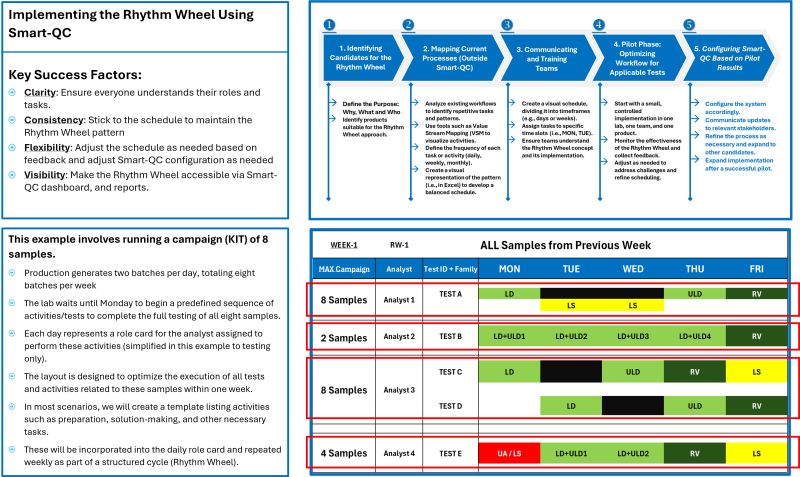
Implementing the Rhythm Wheel: 5-Step Methodology
- Identify Candidates Products for the Rhythm Wheel
- Map Current Processes (Outside Smart-QC)
- Communicate and Train Teams
- Pilot Phase: Optimize Workflow for Applicable Tests
- Configure Smart-QC Based on Pilot Results
Key Success Factors:
- Clarity: Ensure everyone understands their roles and tasks.
- Consistency: Stick to the schedule to maintain the Rhythm Wheel pattern.
- Flexibility: Adjust the schedule as needed based on feedback and refine Smart-QC configuration
as necessary. - Visibility: Make the Rhythm Wheel accessible via the Smart-QC dashboard and reports.