
QC Laboratory Rotation Roles: 5 Smart Ways to Automate Scheduling
Automating QC laboratory rotation roles is one of the most impactful
improvements a Microbiology or Quality Control lab can make. In routine-heavy
environments, assigning the right people to the right tasks every week is
time-consuming and error-prone — especially when managing shift schedules,
qualifications, and workload constraints simultaneously.
Why QC Laboratories Struggle with Rotation Scheduling
Most QC labs run on weekly rhythms. Daily and weekly activities repeat
consistently, and when a Lean program is in place, a rhythm wheel defines
exactly which roles need to be filled — and how often.
The challenge is not knowing what needs to be done. The challenge is
figuring out who should do it, given:
- Qualification requirements — not every technician is trained for every task
- Shift alignment — assigning someone outside their shift creates operational risk
- Availability conflicts — lab support commitments can block technicians
- Workload imbalance — some staff are over-assigned while others are underutilized
- Rotation fairness — the same person shouldn’t fill the same role every week
Without automation, this process typically falls on a supervisor spending
hours cross-referencing spreadsheets — every single week.
How Smart-QC Automates QC Lab Rotation Roles
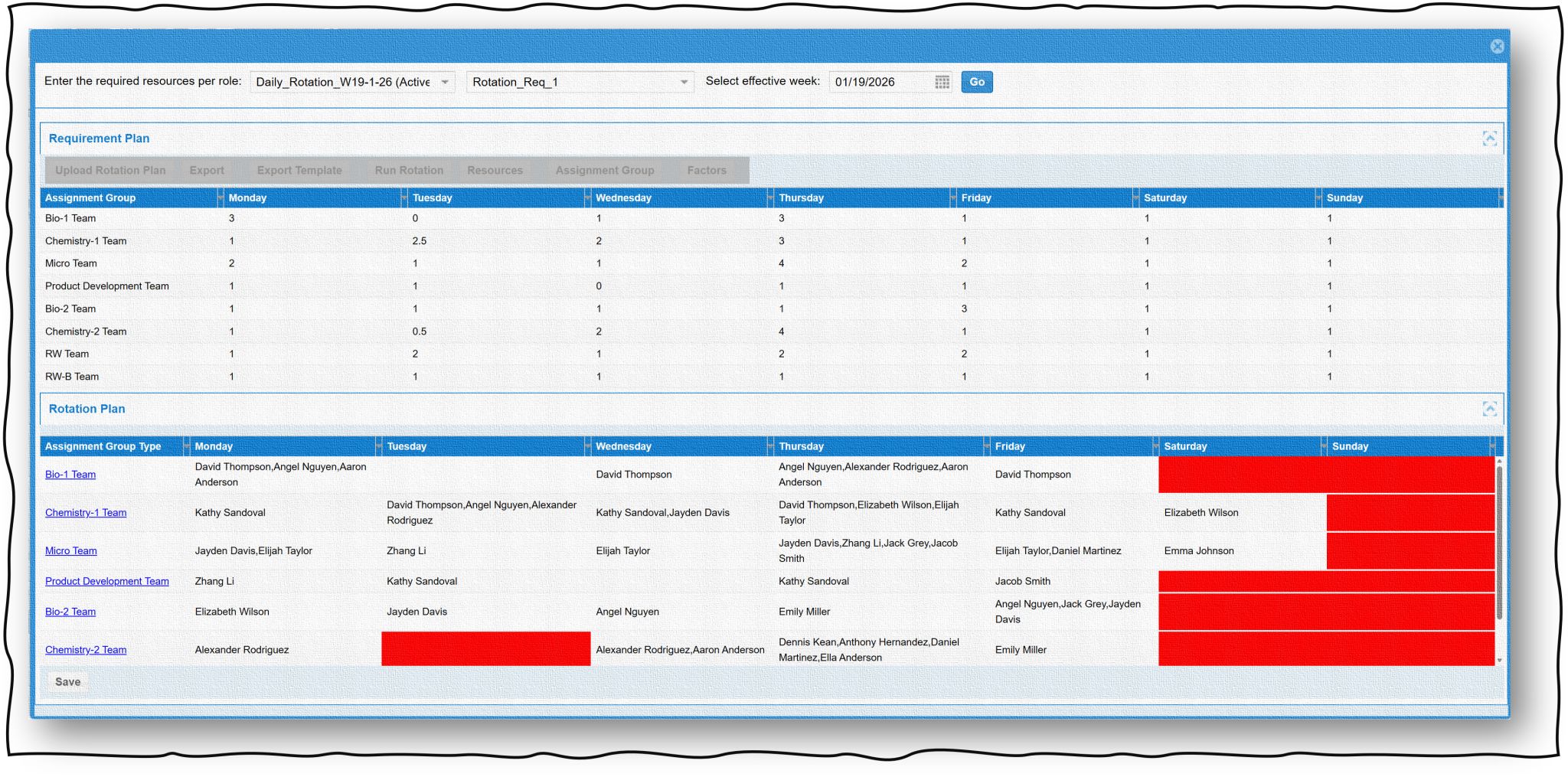
Smart-QC is purpose-built for QC laboratory scheduling. Using a digital
rhythm wheel, it automates the entire rotation and resource assignment process
through a constraint-based algorithm that evaluates every technician before
making an assignment.
1. Qualification-Based Assignment
Smart-QC only assigns technicians who are formally qualified for a given
role or task — eliminating compliance risk and reducing supervisor review time.
2. Real-Time Availability Checking
The system cross-checks each technician’s existing commitments and lab support duties before assigning a rotation role, preventing double-booking
automatically.
3. Shift-Aligned Scheduling
Smart-QC matches every rotation role to technicians on the correct shift,
ensuring assignments are operationally viable from the moment they are generated.
4. Capacity-Aware Workload Distribution
The algorithm tracks remaining available hours for each team member
throughout the week, distributing work evenly and preventing burnout or
bottlenecks.
5. Fair Rotation Enforcement
Smart-QC tracks who performed each role the previous week and actively
avoids repeat assignments — delivering objective, bias-free rotation across
the entire team.
Optimized Sample and Lot Scheduling
Beyond role assignment, Smart-QC generates an optimized schedule for samples and lots. This ensures analytical workload is distributed efficiently
across the team and the week — avoiding last-minute rushes and idle time.
Key Benefits of Automating Lab Rotation Scheduling
Organizations that implement QC lab rotation automation with Smart-QC
report consistent, measurable improvements:
- Significant time savings in weekly schedule preparation
- Objective, fair rotation of resources — free from personal bias
- Greater assignment diversity across roles and technicians
- Balanced workloads across the full team
- Consistent compliance — the right people in the right roles, every time
For labs operating under GMP or ISO 17025 standards, this level of scheduling
rigor also supports audit readiness by creating a transparent, data-backed
record of every resource assignment.
Who Should Use Smart-QC for Lab Rotation Management?
Smart-QC is designed for QC laboratory environments that rely on routine,
repeated activities — including:
- Microbiology laboratories
- Analytical chemistry labs
- Pharmaceutical QC departments
- Medical device testing labs
If your team already uses a rhythm wheel or Lean scheduling framework,
Smart-QC integrates directly into that workflow and dramatically reduces the
administrative burden on supervisors and planning teams.
From Manual Spreadsheets to Data-Driven QC Scheduling
The shift from manual rotation planning to automated QC lab scheduling
is not just an efficiency gain — it is a structural improvement to how your
laboratory operates.
Smart-QC replaces hours of weekly manual effort with a system that runs in
minutes, produces consistent results, and scales as your team grows.
If your QC lab still relies on spreadsheets to assign rotation roles,
now is the time to explore what intelligent automation can do.
Contact us for more information about Smart QC and how it can support your organization’s needs.