
AI in Life Sciences
AI in Life Sciences is rapidly transforming how pharmaceutical and biotechnology organizations operate. From manufacturing optimization to predictive quality analytics, artificial intelligence is enabling faster, smarter, and more compliant operations across the industry.
As digital transformation accelerates, AI technologies are helping organizations analyze complex datasets, automate repetitive tasks, and improve operational decision-making.
Below are some of the most impactful ways AI is currently being applied in the life sciences sector.
Key Applications of AI in Life Sciences
Artificial intelligence is supporting several mission-critical processes within pharmaceutical and biotechnology organizations.
1. Process Optimization
Machine learning models analyze manufacturing data to optimize complex production workflows.
Benefits include:
- Improved production efficiency
- Reduced process variability
- Higher manufacturing consistency
These capabilities are particularly valuable in AI drug manufacturing environments where precision and repeatability are critical.
2. Predictive Maintenance
AI systems continuously monitor equipment health using sensor data and historical patterns.
This enables organizations to:
- Detect anomalies early
- Predict equipment failures
- Schedule proactive maintenance
As a result, companies reduce downtime and maintain uninterrupted manufacturing operations.
3. Supply Chain Optimization
Supply chain complexity in life sciences requires accurate forecasting and efficient planning.
AI helps organizations improve:
- Demand forecasting accuracy
- Inventory optimization
- Supplier risk monitoring
- Logistics planning
These improvements contribute to a more resilient AI in pharmaceutical industry supply chain.
4. Automated Visual Inspection
Quality control processes are increasingly using AI-powered computer vision.
These systems can automatically inspect:
- Tablets
- Capsules
- Vials
- Packaging defects
Compared to manual inspection, AI systems deliver:
- Higher detection accuracy
- Faster inspection speeds
- Consistent quality evaluation
This is a major advancement in life sciences automation and quality assurance.
5. Process Analytical Technology and Real-Time Release
AI models are now integrated with Process Analytical Technology (PAT) to monitor critical manufacturing parameters.
For example:
- Blend uniformity monitoring
- Process variability detection
- Real-time batch quality analysis
This enables Real-Time Release Testing (RTRT), reducing release timelines while maintaining regulatory compliance.
6. Predictive Quality Analytics
One of the most powerful applications of AI in Life Sciences is predictive quality management.
AI models analyze historical manufacturing and quality data to identify patterns that may lead to:
- Batch failures
- Process deviations
- Quality defects
Early detection allows teams to intervene before issues occur, improving right-first-time performance.
Regulatory Considerations for AI Adoption
While AI adoption continues to grow, regulatory compliance remains a critical consideration.
Regulatory authorities are increasingly recognizing the role of AI in pharmaceutical manufacturing.
For example, the FDA AI/ML discussion paper on drug manufacturing highlights how machine learning models may be integrated into regulated environments while maintaining compliance.
Organizations adopting AI must ensure:
- Model transparency
- Data integrity
- Traceability of decisions
- Regulatory documentation
These factors are essential for maintaining trust and regulatory approval.
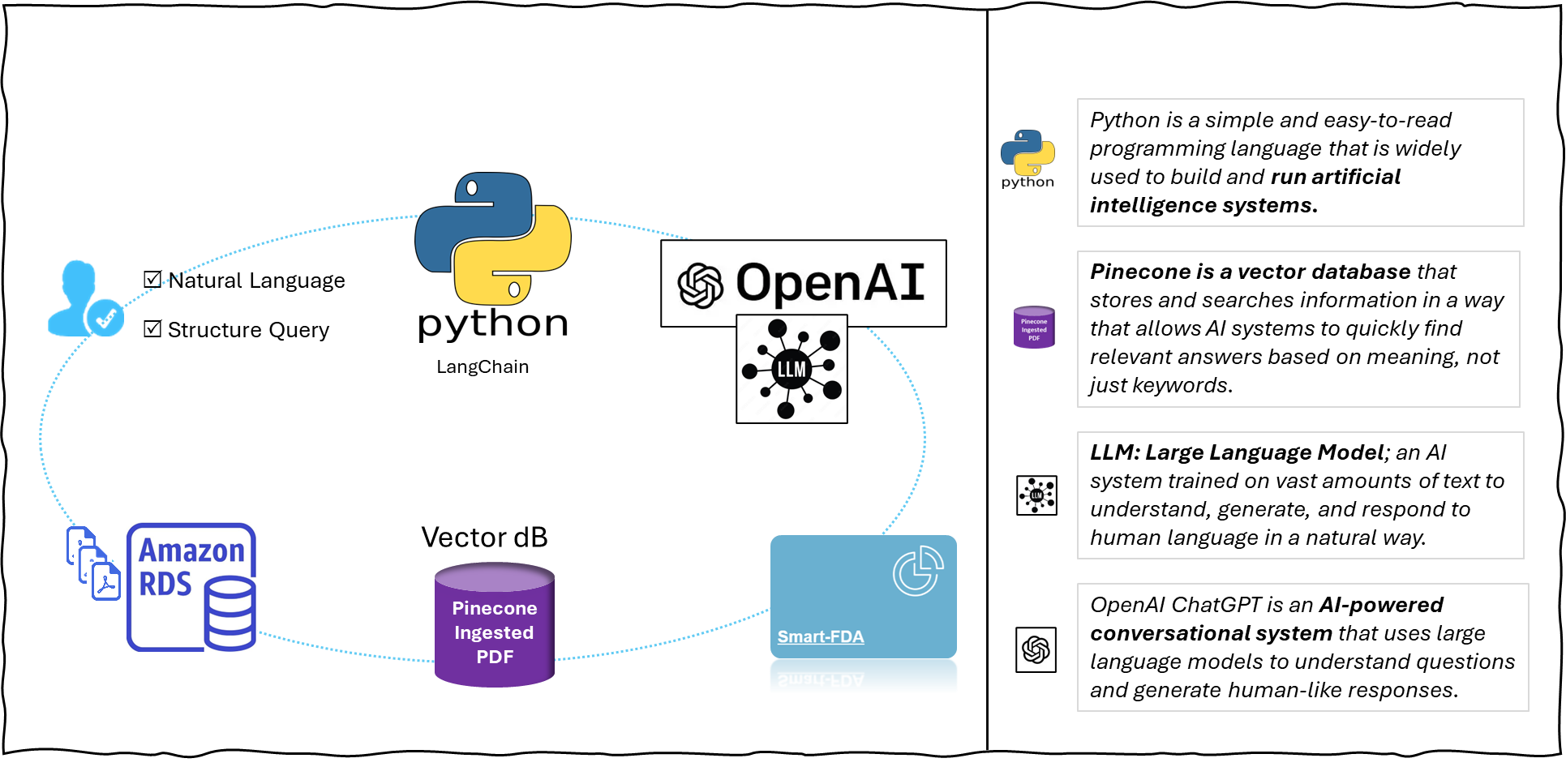
How cResults Uses AI in Life Sciences
At cResults, AI technologies are integrated across multiple platforms to enhance quality and regulatory operations.
Key initiatives include:
AI-Driven Knowledge Access
All product documentation, including:
- Release notes
- Administration guides
- Technical documentation
is ingested into a vector database.
This allows users to query documentation through AI systems powered by ChatGPT by OpenAI, enabling faster knowledge retrieval and better support experiences.
Smart-FDA: AI for Regulatory Intelligence
Smart-FDA is an AI-powered tool that uses:
- Optical Character Recognition (OCR)
- Large Language Models (LLMs)
to analyze FDA 483 inspection observations.
The system extracts and aggregates insights such as:
- Common regulatory observations
- Industry compliance trends
- Role-specific quality issues
This allows organizations to proactively address regulatory risks.
AI-Enhanced Quality Documentation
cResults is also developing AI-enabled tools to streamline quality documentation workflows.
These systems help organizations:
- Manage quality documentation
- Improve process efficiency
- Reduce administrative overhead
Ultimately, these technologies help quality and manufacturing teams operate more effectively.
The Future of AI in Life Sciences
The adoption of AI in Life Sciences is accelerating as organizations recognize its potential to transform manufacturing, quality operations, and compliance management.
Key long-term benefits include:
- Smarter manufacturing processes
- Faster regulatory insights
- Improved product quality
- Reduced operational costs
AI is no longer just an emerging trend. It is becoming a core capability for modern life sciences organizations.
As the industry continues evolving, companies that successfully integrate AI into their operations will be better positioned to innovate, scale, and maintain regulatory excellence.