
Cell Therapy: A Few Scheduling Challenges
One of the key differentiators between cell therapy and other traditional pharmaceutical products is the required testing that must be completed within a strictly defined timeline of hours or 1–2 days.
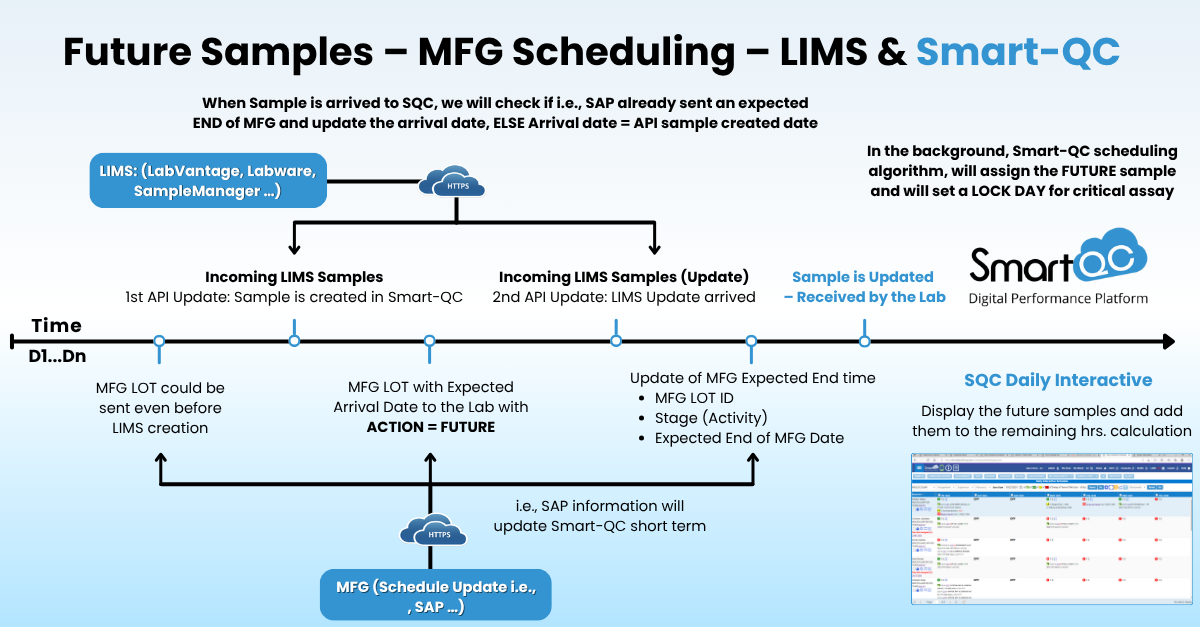
To accomplish this, schedules need to be set in advance, often before the actual samples are received.
In Smart-QC, we handle this in several ways depending on the integration with LIMS / SAP / Manufacturing Scheduling systems. From LIMS, we manage future samples and, through the scheduling algorithm, campaign and assign them to the expected resource who is available, qualified, and on the proper team based on the lab rhythm wheel and rotation assignments.
The expected receipt date can be updated, which then triggers the algorithm to re-schedule accordingly. A well-defined role card is essential, and some flexibility is required to manage manufacturing delays or changes in general.
This is also managed by Smart-QC, especially for in-process testing that requires an even stricter schedule. Getting the future schedule fully automated and agile is truly the value of digital planning and scheduling, allowing resources to focus on exceptions while the majority of the schedule is fully automated.
In Smart-QC, the role card concept is fully embedded as well, presenting instructions (non-GMP) to the analyst, along with the expected arrival of samples and expected hands-on time, making the process more predictable and easier to manage.
In summary, cell therapy scheduling requires speed, precision, and adaptability. By automating future samples, dynamic re-scheduling, and resource alignment, Smart-QC helps laboratories meet tight testing timelines while improving efficiency, predictability, and operational focus.