
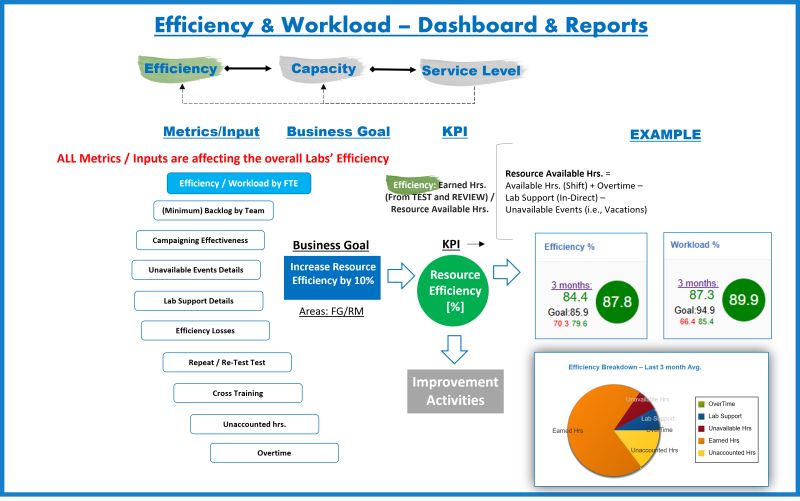
Workload vs. Efficiency: Understanding the Difference and When to Use Each.
Customers often ask us about the difference between workload and efficiency. Here’s a quick breakdown:
1. What’s the Difference?
✔ Efficiency is measured against a standard. If a task is expected to take 4 hours and it actually takes 4 hours, efficiency is 100%. If it takes less time, efficiency exceeds 100%.
✔ Workload is measured by reported hours versus available hours. If you have a 40-hour workweek and allocate 20 hours to a project, 10 hours to testing, and 10 hours to meetings, your workload is 100% because all available hours are utilized.
✔ A key distinction: Workload cannot exceed 100%, while efficiency can.
2. When Should You Use Each?
✔ If the lab’s primary focus is testing, where tasks follow standardized durations, efficiency is the better measure.
✔ If testing accounts for less than 30% of activities (e.g., microbiology labs), where tasks are variable and support activities dominate, workload provides a more suitable metric.
3. What Do We Recommend?
We typically recommend using both as key performance indicators:
✔ Workload ensures time is reported accurately and available hours are utilized.
✔ Efficiency helps identify opportunities for method and testing improvements.
How does your lab measure performance? Let’s discuss in the comments!