
QC Lab Scheduling: Understanding the Operational Complexity
Introduction to QC Lab Scheduling
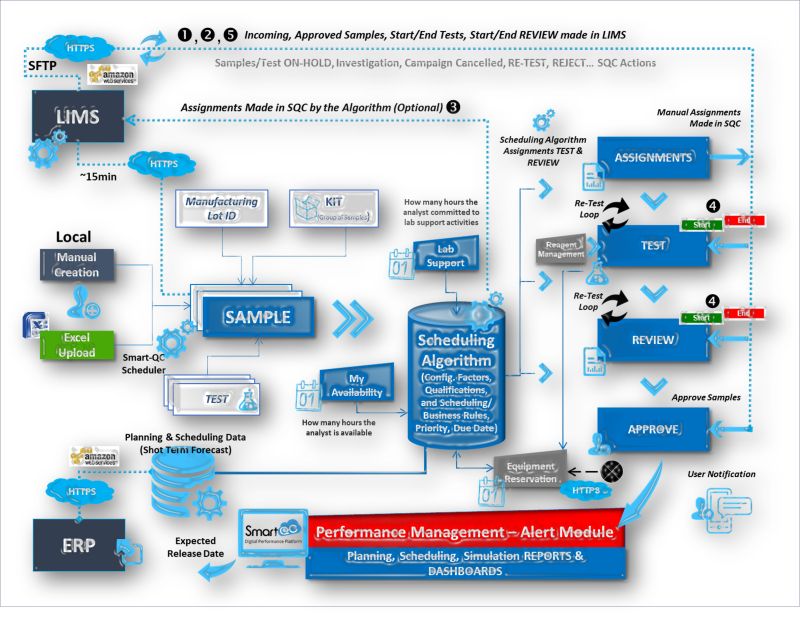
QC lab scheduling is one of the most complex operational challenges in pharmaceutical, biotechnology, and life sciences laboratories. Unlike simple calendar scheduling, laboratory operations involve multiple dependencies, specialized equipment, regulatory constraints, and coordinated analyst activities.
Traditional manual scheduling approaches struggle to balance speed, accuracy, and fairness across laboratory teams. As testing demand increases and regulatory expectations grow, laboratories must manage increasingly complex workflows that involve multiple analysts, instruments, and testing steps.
Understanding the key factors that contribute to this complexity is essential for improving operational efficiency and maintaining compliance.
Quick Turnaround Testing Requirements
Many laboratory tests must be executed immediately when samples arrive. These quick turnaround tests are often tied to manufacturing timelines or product release requirements.
Because of their urgency, these tests must be scheduled immediately or prioritized above other ongoing work. While necessary, this requirement introduces scheduling pressure and disrupts planned laboratory workflows.
In effective QC lab scheduling, systems must dynamically accommodate urgent testing without destabilizing the overall laboratory schedule.
Verification Steps by Secondary Analysts
Certain tests require independent verification by a second analyst before results can be finalized. This practice supports data integrity and regulatory compliance but introduces an additional scheduling dependency.
The primary analyst may complete the test, but final release cannot occur until the secondary analyst reviews the results. Coordinating the availability of both analysts adds another layer of complexity to laboratory operations.
Without intelligent coordination, verification requirements can create delays in test completion.
Multi-Step Test Workflows
Many laboratory tests involve multiple sequential stages.
For example, analytical workflows such as HPLC testing may include:
- Sample preparation
- Instrument analysis
- Data review and interpretation
These stages may occur within the same shift or across different shifts, sometimes involving different analysts or teams.
Effective QC lab scheduling must ensure that these interconnected steps are aligned so that each stage occurs at the correct time without unnecessary delays.
Mobile Scheduling Requirements
Modern laboratories increasingly require mobile scheduling access for analysts working outside traditional office environments.
Analysts on the manufacturing floor or in different laboratory areas may rely on mobile devices such as tablets or smartphones to review schedules, update task status, or receive assignment changes.
Mobile scheduling support ensures flexibility and real-time communication across laboratory teams.
Complex Test Scheduling Constraints
Certain laboratory tests require specialized scheduling logic due to operational or regulatory requirements.
Parallel Test Execution
Some tests must be conducted simultaneously by multiple analysts. These activities require coordinated scheduling across team members to ensure synchronization.
Lagged Test Scheduling
Certain analytical tests must occur on different days with defined intervals between steps. Stability testing and intermediate sampling points are common examples.
Analyst Separation
Regulatory requirements may require different analysts to perform specific steps of a testing process to maintain independence and data integrity.
Sample Batching
Some analytical tests should only be performed when a minimum number of samples accumulate. Batching helps maximize instrument efficiency and reduces operational overhead.
Shift and Day Restrictions
Certain tests can only be performed during specific shifts or on certain days. These restrictions may arise from instrument availability, specialized expertise, or operational policies.
Priority Adjustments
Some tests must be completed earlier than the overall sample due date. This creates additional complexity in balancing laboratory workloads.
Pre-Scheduling Critical Tests
In some situations, tests must be tentatively scheduled before the sample is received to ensure the laboratory is prepared for upcoming workloads.
Workforce and Analyst Management
Beyond technical scheduling constraints, laboratories must also manage workforce considerations.
Rotation-Based Assignment
Daily or weekly task rotations help distribute work evenly across analysts. Rotations also ensure analysts maintain proficiency across multiple testing activities.
Analyst Preference Alignment
Whenever possible, aligning tasks with analyst preferences or expertise can improve engagement and performance. Analysts often perform more efficiently when assigned techniques they frequently use.
Ergonomic and Workload Limits
Laboratories must define limits on how many tests an analyst can perform per shift, day, or week. These rules protect employee well-being and reduce the risk of fatigue-related errors.
Effective QC lab scheduling must balance operational efficiency with sustainable workloads.
Cross-Team Collaboration in Laboratories
Laboratories often operate with multiple teams responsible for different analytical functions. During periods of increased workload, cross-team collaboration becomes essential.
Enabling primary and secondary team assignments allows laboratories to redistribute work and manage backlog without disrupting team structure.
Flexible resource allocation helps maintain laboratory throughput during peak demand.
Intelligent Automation in QC Lab Scheduling
Given the complexity of laboratory operations, manual scheduling systems are often insufficient to handle the large number of constraints involved.
Modern laboratory scheduling platforms introduce intelligent logic layers that go beyond simple calendar booking.
These systems can dynamically evaluate:
- Analyst availability
- Instrument capacity
- Test dependencies
- Regulatory constraints
- Priority levels
By analyzing these factors simultaneously, automated scheduling solutions can optimize laboratory workflows while maintaining compliance and operational fairness.
Summary
Each of the factors discussed above demonstrates why QC lab scheduling is inherently complex. Laboratories must balance urgent testing demands, regulatory requirements, workforce constraints, and instrument availability.
Traditional manual scheduling approaches struggle to handle these competing variables effectively. Intelligent scheduling systems such as SmartQC introduce advanced logic that automates decision-making and optimizes laboratory workflows.
By leveraging automation and structured scheduling strategies, life sciences laboratories can significantly improve efficiency, reduce operational stress, and maintain regulatory compliance.
To learn how advanced quality and compliance platforms can improve laboratory operations, Contact Us at cResults. Solutions including Smart-QC, Smart-QA, and Smart-FDA help life sciences organizations streamline QC lab scheduling, improve efficiency, and maintain regulatory compliance.