
Lab Backlog Management: A Strategic Approach to Improving Laboratory Throughput
Introduction to Lab Backlog Management
Lab backlog management is a critical operational challenge faced by laboratories in regulated industries such as pharmaceuticals, biotechnology, and medical devices. When testing demand exceeds laboratory capacity, samples begin to accumulate, delaying batch releases and impacting manufacturing timelines.
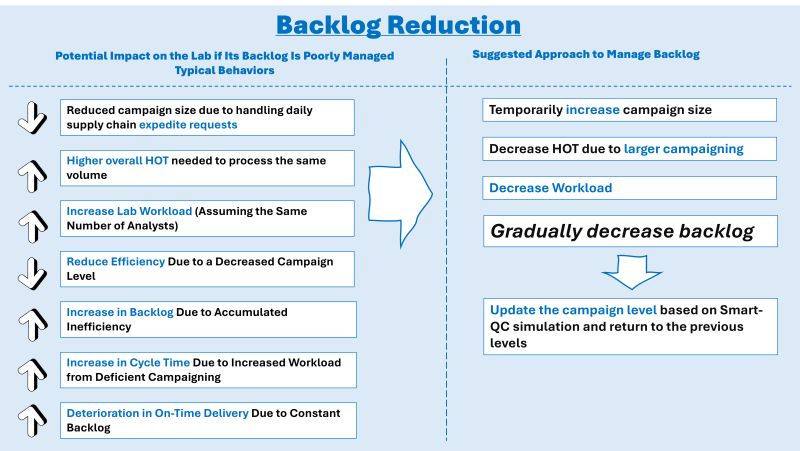
Many organizations attempt to address laboratory backlog by continuously reprioritizing urgent manufacturing lots. While this approach may deliver short-term results, it often creates operational instability and reduces overall laboratory efficiency.
A more sustainable strategy for lab backlog management focuses on improving throughput rather than reacting to daily urgency. By optimizing workflows, scheduling, and resource utilization, laboratories can gradually reduce backlog while maintaining operational stability.
Current Lab Backlog Practices and Challenges
In many organizations, the most common response to laboratory backlog is daily coordination between supply chain teams and laboratory management. These meetings aim to prioritize critical manufacturing batches and release specific lots as quickly as possible.
Although this method can occasionally accelerate urgent releases, it introduces several operational challenges.
Increased Operational Stress
Frequent changes in priorities place additional pressure on laboratory staff. Scientists and analysts must repeatedly adjust testing plans, increasing cognitive load and the potential for human error.
Disruption of Planned Workflows
Constant reprioritization prevents laboratories from following structured testing schedules. Instead of operating efficiently, teams are forced to repeatedly interrupt ongoing work to address newly prioritized samples.
Reduced Equipment Utilization
Analytical instruments often require setup, calibration, and changeovers between different tests. When priorities shift frequently, laboratories cannot run tests in optimal sequences, leading to inefficient equipment usage.
Long-Term Backlog Growth
Ironically, the strategy intended to reduce backlog can actually increase it. As workflows become fragmented and inefficient, laboratory throughput decreases, allowing the backlog to grow further.
Why Traditional Prioritization Creates Inefficiencies
The fundamental problem with traditional backlog response strategies is that they prioritize immediate responsiveness over overall system efficiency.
While releasing a single urgent lot may seem beneficial, the repeated disruption of laboratory workflows prevents teams from operating at their maximum productive capacity.
Effective lab backlog management requires recognizing that laboratories function best when processes remain stable and predictable. Frequent schedule changes undermine both equipment efficiency and personnel productivity.
Instead of focusing on daily lot releases, organizations should prioritize maintaining consistent laboratory throughput.
A Strategic Approach to Managing Lab Backlog
A more effective strategy focuses on optimizing laboratory operations for sustained productivity rather than short-term urgency.
Although this approach may initially seem counterintuitive, it allows laboratories to process larger volumes of work more efficiently over time.
Campaign-Based Testing
One of the most effective methods for improving laboratory efficiency is grouping similar tests together in batches.
By running similar analyses sequentially, laboratories can reduce instrument changeovers, minimize setup time, and improve equipment utilization.
Campaign-based operations allow analysts to process larger volumes of samples with fewer interruptions.
Accepting Short-Term Delays
During the first few days of implementing a new backlog strategy, organizations may experience slower individual lot releases.
However, this temporary delay allows laboratories to stabilize operations and restore workflow efficiency. Over time, the increased throughput enables faster overall sample processing.
Improving Scheduling and Resource Allocation
Efficient laboratory scheduling ensures that instruments, analysts, and testing protocols are aligned to maximize productivity.
Optimized scheduling reduces idle instrument time and improves coordination between testing stages, helping laboratories maintain consistent output.
Reducing Stress and Operational Variability
Laboratory teams perform best when workflows are predictable and manageable.
Providing laboratories with operational clarity and reducing daily priority shifts improves morale, lowers stress levels, and reduces the likelihood of mistakes.
Effective lab backlog management therefore benefits not only operational performance but also workforce stability.
Expected Results of Throughput Optimization
Organizations that implement strategic backlog management can expect several measurable improvements.
Gradual Backlog Reduction
By increasing laboratory throughput, the volume of pending samples begins to decrease steadily over time.
Improved Resource Utilization
Laboratory instruments and personnel operate more efficiently when testing workflows are stable and organized.
Reduced Errors and Rework
Lower stress levels and predictable schedules reduce the likelihood of mistakes, which also minimizes rework and additional testing delays.
Sustainable Operational Balance
Instead of constantly reacting to urgent lots, organizations can maintain a balanced workflow that supports both manufacturing demands and laboratory efficiency.
Preventive Measures to Avoid Future Backlogs
While backlog management strategies are essential during high workload periods, prevention is equally important.
Organizations can reduce the likelihood of laboratory backlog through proactive planning and monitoring.
Improved Demand Forecasting
Upstream partners such as manufacturing and supply chain teams should provide early visibility into upcoming testing requirements.
Better forecasting enables laboratories to prepare resources and schedules in advance.
Early Warning Indicators
Monitoring key operational metrics can provide early signals of potential backlog issues.
Indicators such as work-in-progress trends, testing queue lengths, and instrument utilization rates allow organizations to detect capacity constraints before they become critical.
Preemptive Action Plans
Organizations should establish predefined response plans that activate when backlog thresholds are reached.
These plans may include resource reallocation, temporary capacity expansion, or workflow adjustments designed to prevent backlog escalation.
Strong preventive strategies complement effective lab backlog management, ensuring laboratories maintain consistent performance even during periods of increased demand.
To learn how digital quality and compliance platforms can help improve laboratory efficiency, Contact Us at cResults. Solutions such as SmartQC, SmartQA, and SmartFDA support life sciences organizations in optimizing operations and maintaining regulatory compliance.