
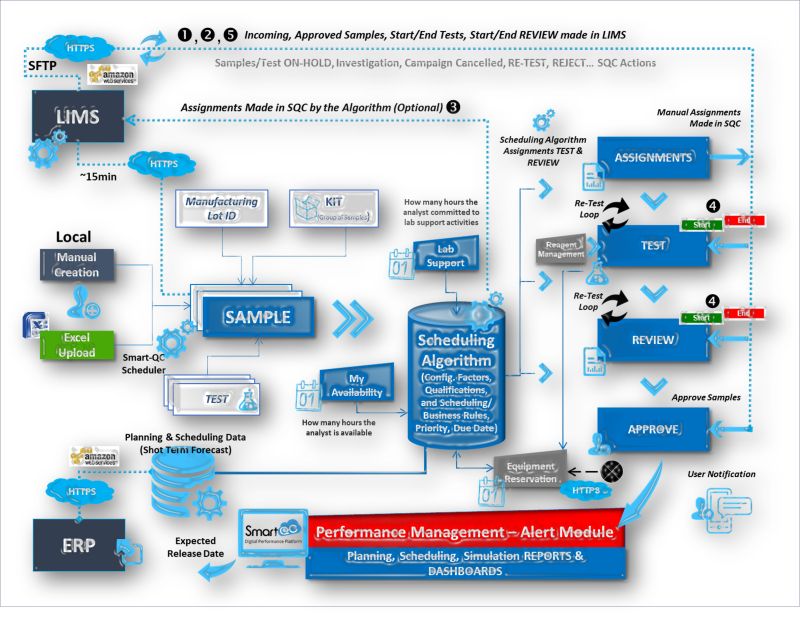
Why QC Lab Scheduling is Inherently Complex (Smart-QC) – PART-2
- Quick Turnaround Tests
✅Certain tests must be scheduled immediately upon sample arrival or prioritized highly to meet critical
deadlines. - Verification Steps by Secondary Analyst
✅Some tests require checks by a second analyst before final completion, introducing dependencies into
scheduling. - Multi-Part Test Workflows (Prep/Run/Analysis)
✅Different steps (e.g., Assay HPLC Prep vs. HPLC Analysis) may need to be scheduled within the same
or consecutive shifts, sometimes across different teams. - Mobile Scheduling Support
✅Flexibility through iPad or smartphone access is necessary, especially for analysts on the
manufacturing floor without ready access to laptops. - Test-Specific Scheduling Requirements
- a. 🔍Parallel Test Execution: Some tests must be assigned and performed simultaneously and coordinated across analysts.
- b.🔍 Lagged Test Scheduling: Certain tests must run on different days with a defined lag (e.g., stability pulls, intermediate timepoints).
- c. 🔍Analyst Separation: Different analysts must perform certain tests for independence or compliance reasons
- d. 🔍Batching Samples: Some tests should only be scheduled once a minimum number of samples accumulate or after a waiting period.
- e. 🔍Shift/Day Restrictions: Certain tests are restricted to specific days or analyst shifts (e.g., availability of specific instruments or expertise).
- f. 🔍Priority Adjustments: Some tests require earlier testing or review completion dates than the sample’s general due date.
- g. 🔍Pre-Scheduling Critical Tests: Tests expected in the future must be tentatively scheduled before sample receipt to ensure readiness.
- Rotation-Based Assignment
✅Daily or weekly task rotations ensure equitable distribution of work and maintain analyst proficiency
across activities. - Analyst Preference-Based Scheduling
✅Where feasible, aligning tasks to analyst preferences improves engagement and performance (e.g.,
preferred techniques). - Ergonomics or other Limits
✅Rules are needed for how many tests can be scheduled per analyst per shift/day/week to balance
workload and avoid burnout. - Cross-Team Support (Primary/Secondary Assignment)
✅Enable reallocation of resources between teams to handle backlog surges without breaking team
structure. - Automatic Prioritization Decisions
✅The system should dynamically prioritize test or review activities based on real-time backlog urgency or customer deadlines.
Summary Observation:
Each of these points reveals how traditional manual scheduling approaches struggle to balance speed, efficiency, and fairness simultaneously. ⚡Smart-QC has an intelligent logic layers — beyond simple calendar booking — to automate and optimize QC lab operations.